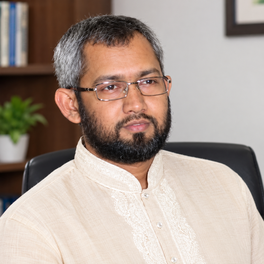
“Successful healthcare management depends on building a reliable operational system — one that helps people do the right thing consistently. Treating patients well and installing good software are both part of that system, but neither is sufficient on its own.”
Executive Summary & Key Takeaways
- Systems Over Heroics: Treating patients well and installing good software are both vital, but neither replaces a standardized operational system.
- Unified Case & Document Management: Clinical documents and compliance records must live inside the active case, eliminating disconnected filing and lost paperwork.
- SOP-Enforced Error Prevention: Standard operating procedures with mandatory software validation prevent intake errors before they trigger multi-day audit delays.
- Continuous Improvement Loop: Operating our own medical centre gives direct, real-world operational exposure that closes the gap between clinical reality and software development.
Running multiple clinics teaches lessons that no software specification can. It shows how small operational errors compound, how inconsistent processes add complexity that nobody intended, and how people, processes and technology, properly aligned, can change the way a clinic works from one day to the next.
At ClinicOS, that experience has reinforced one principle above all others. Successful healthcare management depends on building a reliable operational system, one that helps people do the right thing consistently. Treating patients well and installing good software are both part of that system, but neither is sufficient on its own.
Our perspective has been shaped by working closely with healthcare operations, by supporting clients and handling their change requests, and by using ClinicOS in our own medical centre. Together, these experiences have shown us what clinic owners and administrators need beyond a list of software features.
The lessons that follow are the ones we consider most important.
1. Standardization Is the Foundation of Operational Excellence
Every clinic is different. Patient volumes, specialties, staffing and daily workloads vary from one location to the next. Essential operational processes, however, should not rest on individual habit or personal preference.
Billing illustrates the point. When employees follow different procedures, inconsistencies appear in how charges are recorded, how transactions are handled and how financial reports are prepared. The same pattern can emerge in case management, documentation and routine administration.
ClinicOS is designed to help clinics establish standardized billing processes and structured operational workflows, so that they can follow consistent procedures while retaining reasonable flexibility for their own requirements. The aim is a set of clear, repeatable standards for essential activities, rather than uniformity for its own sake.
Standardization reduces avoidable variation, strengthens accountability and gives multi-location management a firmer foundation.
Across our regional clinic network, front-desk staff at one location were applying discount codes for repeat patients without central approval, while another location made financial adjustments through end-of-day supervisor overrides. The inconsistency delayed daily closeouts and produced recurring reconciliation errors at monthly audits. After we adopted ClinicOS’s standardized billing workflow, which limits discounts to authorized roles and enforces predefined transaction categories, ad-hoc adjustments were no longer possible outside the approved process. In the period that followed, we recorded approximately 45% fewer billing discrepancies, and monthly audit reconciliation fell from about two days to a few hours.
2. Complete Case Management Means Knowing What Happens Next
Healthcare operations rarely end with a single transaction. A case may pass through several stages, involve several employees, depend on supporting documents and require follow-up actions completed in the correct sequence.
When the relevant information is spread across paper files, spreadsheets, messages and individual memory, visibility suffers. A case can stall because a document is missing, a task is unfinished, or the next person responsible does not know what is expected of them.
ClinicOS provides a structured environment for managing cases and their associated activities. By organizing information and supporting documentation around each case, it helps authorized users see where the case stands and find what they need to move it forward. Recording what has happened is only half of case management; the other half is keeping sight of what remains to be done.
A well-managed case has a clear history, accessible supporting information and a defined path to completion.
At our high-volume candidate screening centre, each pre-employment medical examination for corporate clients involves physical check-ups, laboratory tests, chest X-rays and physician sign-off, coordinated across several departments. Missing laboratory results or late sign-offs regularly held up candidates’ onboarding. ClinicOS’s centralized case view now brings each candidate’s medical records, test results and compliance status together in a single tracking file. In our experience, this removed the principal administrative bottlenecks, reduced clearance turnaround by around 40%, and gave us a consistent check that each file meets the applicable requirements before it is submitted to the prospective employer.
3. Document Management Is an Operational Necessity
Documents are central to healthcare administration. Depending on the services provided, a case may require reports, forms, supporting records, approvals and other paperwork.
The challenge lies less in storing documents than in ensuring that each one is linked to the right case and can be retrieved by an authorized person when it is needed. Poorly organized document management leads to repeated requests for the same information, avoidable delays, duplicated work and uncertainty about which records apply.
ClinicOS supports the organization of case-related documents within the operational workflow itself, reducing dependence on disconnected filing systems and individual record-keeping practices.
Documents belong inside the managed case, not in a separate administrative task that staff must continually reconcile.
Processing pre-employment health records at our medical centre once meant handling paper vaccination cards, physical fitness certificates and laboratory reports that were often misplaced or duplicated across separate filing cabinets. Requests for duplicate documents and delayed compliance submissions followed. With ClinicOS document management integrated into our candidate workflow, each form and clearance report is filed in the correct candidate record as part of the process itself. Lost paperwork has effectively ceased to be an issue for us, and staff can typically retrieve a document in seconds.
4. Reliable SaaS Operations Reduce the Burden on Clinics
Maintaining software across several locations is a different challenge from running a single installation. Differing versions, inconsistent configurations, manual updates and location-specific technical faults all add complexity.
A well-managed Software-as-a-Service (SaaS) model allows the provider to maintain the platform centrally. This simplifies updates and maintenance and allows approved improvements to reach participating clinics consistently. Clinic owners and administrators, in turn, spend less effort managing software installations and more on healthcare operations.
SaaS does not, by itself, guarantee uninterrupted service, flawless performance or error-free data. Those outcomes depend on sound infrastructure, monitoring, security controls, backup arrangements, recovery procedures and disciplined software development. Our objective at ClinicOS is a dependable, responsive operating environment that protects data consistency and keeps avoidable disruption to a minimum.
Technology should reduce operational complexity for clinic staff, not add another layer of work.
During a major seasonal hiring rush, our medical centre saw a sharp rise in concurrent candidate record uploads and verification requests. Under our previous on-premise infrastructure, peaks of this kind required manual intervention and often slowed the system, putting timely compliance reports at risk. On ClinicOS’s cloud-based architecture, capacity scaled automatically to absorb the spike. Downtime during that period was negligible, medical records remained accessible, and status updates reached corporate clients promptly.
5. Standard Operating Procedures Help Prevent Basic Mistakes
Many operational problems begin with small, preventable mistakes rather than complex technical failures: incomplete information, a missed step, an incorrect entry, an inconsistent procedure, or uncertainty about what should happen next.
Standard Operating Procedures (SOPs) define how recurring activities should be carried out. Supported by clear instructions and appropriate system workflows, they allow staff to follow established practice instead of relying on informal guidance or memory. ClinicOS is built to support this approach, helping clients work within structured processes and providing practical guidance on using the system correctly.
SOPs prove especially valuable when new employees join, responsibilities change or a clinic expands its operations.
A good operational system helps users avoid common mistakes in the first place, rather than simply recording them after the fact.
During high-volume periods, intake staff occasionally omitted the mandatory vaccination-history sign-off for healthcare-sector candidates, and compliance audits would flag the omission days later, delaying final placement. We built a mandatory validation step into our ClinicOS SOPs: a file cannot move to the physician review stage until the digital sign-off is complete. Incomplete files can no longer progress past that point, and our first-pass compliance rate has improved by about 30%.
6. Centralized Visibility Improves Management Across Locations
Managing several clinics calls for a different perspective from managing one. A clinic manager may understand the daily situation at a single location well; senior management needs a broader view, one that shows performance across locations, highlights unusual variation and indicates where additional attention is required.
A centralized management system can bring this information together and support consistent reporting, subject to the reporting capabilities and configuration in place. This matters because routine oversight should not depend on contacting every clinic individually to learn its operational status.
Centralized visibility should complement local accountability, not replace it. Branch managers still need clearly defined responsibilities and the authority to resolve day-to-day problems.
Strong multi-clinic management combines common standards and centralized visibility with clear local responsibility.
When we managed candidate screening across our downtown and suburban medical centres, each branch tracked its daily throughput in a separate spreadsheet. Senior leadership found it difficult to understand why the suburban branch faced recurring clearance backlogs while the downtown branch had spare capacity. ClinicOS’s centralized multi-location dashboard gave management near real-time visibility of bottlenecks across branches, allowing us to reassign physician reviewers as needed and balance candidate volumes more effectively.
7. Small Inefficiencies Become Major Problems at Scale
An extra administrative step, a repeated data-entry task or a short delay may seem insignificant at a single clinic. Repeated across many locations, the same issue can carry a substantial cumulative cost.
Consider the time spent correcting avoidable errors, searching for documents, answering recurring questions or resolving inconsistencies in routine processes. Each instance may be manageable; together they weigh on productivity, staff workload and service delivery. Operational improvement should therefore address recurring sources of friction as well as major problems.
ClinicOS gives clinics an opportunity to identify where structured workflows, clearer guidance or software improvements can simplify everyday work.
At scale, small improvements deliver meaningful benefits when they remove recurring work across an entire organization.
At our medical centre, staff were spending roughly two extra minutes per candidate re-entering appointment dates from physical logbooks into the digital billing system. Across approximately 3,000 candidates a month in all branches, that amounted to around 100 hours of staff time each month, together with frequent transcription errors. Once ClinicOS synchronized appointment scheduling with data entry automatically, the manual step was removed altogether. We estimate the change saves more than 1,000 staff hours a year, and transcription errors of this kind have become rare.
8. Client Change Requests Need Investigation, Not Just Implementation
Healthcare organizations have different needs, and those needs evolve over time. As clients use ClinicOS, they submit change requests, report problems and suggest improvements based on their own operational experience.
Not every request should become a software feature. Some reveal a genuine product requirement; others are better resolved through configuration, training, clearer documentation or an explanation of existing functionality. Sound change management therefore begins with understanding the problem, before any decision is made about the requested solution.
At ClinicOS, change requests from primary clients are handled by experienced domain experts, who investigate the underlying requirement, assess its operational significance and determine the appropriate course of action. Where a request reflects a genuine product requirement, it is passed to the Research and Development (R&D) team for implementation. The resulting changes then go through Quality Assurance (QA), which verifies the relevant functionality and quality. Once approved, the release is handed to the deployment team for controlled deployment to production.
This process gives client feedback a clear path to product improvement while keeping domain analysis, development, testing and deployment as distinct responsibilities.
Good change management turns client requests into carefully evaluated improvements, rather than allowing the product to evolve through uncoordinated modifications.
A corporate client once asked urgently for a feature that would allow its team to manually override physician health clearances. On investigation, our domain experts found that the client’s team was unaware of ClinicOS’s existing multi-tier approval workflow. Rather than build an override that would have introduced clinical and compliance risk, we provided targeted training on the authorization levels already available, which resolved the client’s bottleneck appropriately.
9. Every Support Interaction Can Improve the Product
Client support is often judged by how quickly an individual question is answered or a particular issue is resolved. Timely assistance matters, but support delivers far greater value when recurring issues are examined systematically.
Repeated questions about the same workflow may indicate that instructions are unclear. Similar mistakes across different clinics may reveal a training gap, an overlooked usability issue or an opportunity to improve the product. At ClinicOS, recurring questions and useful support findings can be converted into knowledge-base articles and new frequently asked questions (FAQs). Where appropriate, the same information can strengthen automated support, so that clients find answers to common questions more efficiently.
The result is a continuous learning process: support identifies recurring problems, documentation captures the solutions, and better guidance helps prevent the same confusion from affecting other users.
Excellent support resolves today’s issue and helps reduce tomorrow’s support burden.
During one peak onboarding season, support received a high volume of similar enquiries from corporate client administrators asking how to confirm whether a candidate’s conditional medical clearance had been formally approved by a specialist. Rather than answer each ticket individually, the support team recognized a common usability issue and worked with product documentation to publish a dedicated knowledge-base guide and a clear dashboard tooltip. Ticket volume for candidate-status enquiries fell significantly afterwards, and clients were able to find the answer for themselves.
10. Support Cooperation Is Essential to Client Satisfaction
Even reliable software cannot eliminate every question, unexpected situation or operational challenge. Clients need a support team that understands their concerns, communicates clearly and works with the appropriate internal teams to find a solution.
Support is most effective when it is connected to domain experts, development, QA and deployment, rather than operating as an isolated service desk. A reported problem may require clarification from a domain expert, technical investigation by R&D, verification by QA or practical guidance from support, and the quality of cooperation between these functions shapes how effectively the issue is handled.
It is equally important to distinguish between a software defect, a configuration issue, a training need and a new business requirement. Each calls for a different response.
Client satisfaction depends on software functionality and, just as much, on how well the people who deliver, maintain and support it work together.
During a critical audit for a major enterprise client, an unexpected data-synchronization failure prevented candidate compliance records from updating across our regional medical centres. Support escalated the issue immediately to R&D and QA, who worked together to trace it to a rare API timeout. R&D deployed a hotfix promptly, QA verified data integrity within about an hour, and support kept the client informed throughout. This coordination resolved the problem before it could cause serious disruption, and the incident led us to strengthen our operational reliability procedures.
11. Our Own Medical Centre Keeps Us Close to Real-World Needs
One of the most distinctive aspects of our approach is that we use ClinicOS in our own medical centre.
This gives us direct exposure to the operational realities of healthcare delivery: the workflows, time pressures, user expectations and practical difficulties that are hard to grasp fully from client feedback alone. Because we rely on the same solution, we are well placed to identify usability issues, potential defects and improvement opportunities in the course of daily work, and some issues come to light before a client reports them.
Our medical centre works closely with the software development and QA teams. When a problem is identified, the relevant teams investigate it, reproduce it where possible, determine whether it represents a defect or an improvement opportunity, and decide on the appropriate response. The medical centre contributes practical operational insight, the development team handles implementation, and QA verifies the results. Each function retains its own responsibilities, and all share one objective: making ClinicOS more dependable and useful in real clinical environments.
This arrangement complements structured testing and independent quality checks rather than replacing them. What it adds is a stronger feedback loop between real-world use and disciplined product development.
A healthcare technology provider that experiences the operational realities of its own product has a valuable opportunity to identify problems earlier and develop more practical solutions.
During routine use at our medical centre, intake nurses noticed that pressing the Enter key while recording several candidate vaccination dates sometimes triggered an unintended screen refresh that cleared the form in progress. They logged it with our internal product team. R&D traced the fault to an unhandled form-submit event, QA verified the fix across multiple browsers and devices within hours, and the patch was deployed before, to our knowledge, any client encountered the issue. It is a clear example of how daily hands-on use can surface issues that standard test environments may miss.
12. Sustainable Growth Requires Systems, Not Constant Intervention
A clinic network can operate successfully while depending heavily on its owner or a small number of experienced employees. That model becomes harder to sustain as the organization grows.
When essential knowledge exists only in individuals’ memories, decisions go undocumented, or every exception requires senior management intervention, expansion brings additional complexity and risk. Standardized processes, organized case records, clear responsibilities, reliable reporting and reusable operational knowledge all reduce this dependence on individuals.
ClinicOS supports this operating model by bringing essential activities into a more structured environment. The broader objective is to make established processes easier to repeat, monitor and improve as the organization expands.
Sustainable growth comes from repeatable systems that allow people to perform consistently, rather than from relying on a few individuals to solve every problem.
At our medical centre, appointment scheduling and final clearance sign-off once depended on a single senior operations manager who validated each file manually before client delivery. When candidate volume doubled during peak hiring seasons, that single point of control became a serious bottleneck, and onboarding was delayed whenever the manager was unavailable. With ClinicOS’s standardized clearance workflows and role-based approval routing, verification duties are now distributed among authorized team members in line with clear SOPs. Our operations now scale across locations far more smoothly, without depending on constant individual intervention.
13. Continuous Improvement Is a Team Effort
All of these lessons point to a broader principle: improving healthcare operations requires a continuous feedback loop linking real-world use, client support, domain expertise, product development, quality assurance and deployment.
At ClinicOS, that loop can begin with an observation in our own medical centre, a problem reported by a client or a recurring question received by support. Domain experts investigate the issue. If a product change is justified, R&D develops the solution, QA verifies it against the relevant quality requirements, and the deployment team releases the approved change. In parallel, recurring questions may lead to better FAQs, knowledge-base articles or operational guidance. After deployment, feedback from actual use helps identify the next opportunities for improvement.
This is more than a software development cycle. It is a way of connecting the realities of healthcare operations with a disciplined process for improving the tools that support them.
Continuous improvement works best when every department contributes its expertise and shares responsibility for the client’s overall experience.
During a routine audit of our medical centre’s onboarding logs, our QA team identified an edge case in which multi-department clearance statuses occasionally failed to synchronize when a candidate’s laboratory results were uploaded at the same moment as a physician’s sign-off. Our domain experts examined the workflow discrepancy, R&D developed a synchronization patch, and QA tested it across multiple simulated high-volume scenarios before deployment. Our monitoring showed full data consistency for these records throughout the peak hiring periods we subsequently reviewed, and client feedback has been consistent with that result.
Conclusion: Better Systems Create Better Operations
Better Systems Create Better Operations
Running multiple clinics has taught us that successful healthcare management cannot be achieved through technology alone. It requires consistent processes, organized case management, reliable systems, clear operating procedures, effective client support and a disciplined approach to improvement.
For clinic owners, the benefits are practical: greater operational visibility, fewer avoidable mistakes, better control of cases and documentation, and a more consistent way of managing daily activity. For the technology provider, the responsibility extends beyond delivering software. It includes understanding real clinical needs, investigating client feedback carefully, maintaining quality standards and ensuring that lessons learned are used to improve both the product and the knowledge that supports it.
Our experience with ClinicOS, including its use in our own medical centre, has reinforced the importance of connecting technology development with actual operational experience. We believe a healthcare management system should help people follow established processes, maintain control, identify problems and make better-informed decisions, in addition to recording what has happened.
Ultimately, the goal is to help every clinic, however many an organization operates, run with greater consistency, control, confidence and efficiency. That is the principle we continue to apply as ClinicOS evolves through real-world use, client collaboration and continuous improvement.